Why an old brow tattoo needs an assessment first
When someone asks me about tattoo brows vs microblading, I explain that the condition of the existing pigment matters more than the name of the new technique. An old brow tattoo is not an empty canvas. Its colour, depth and shape will influence anything placed over it.
I look at the brows in person, ideally when the treatment area is free from makeup. I assess whether the pigment has faded evenly, whether it has changed tone, and whether the original shape still works with your natural brows and facial proportions. I also consider the texture of the skin and any history of sensitivity, scarring or difficult healing.
Faded, soft old work can sometimes be incorporated into a new design. A heavily saturated tattoo, a grey or reddish result, blurred edges, or a shape that sits significantly outside the natural brow may not be improved by simply adding more pigment. In those cases, layering more colour can make the brows look denser rather than more natural.
My background in fine art, sculpture and photography influences how I approach this assessment. I pay close attention to colour, balance and how the finished shape relates to the whole face, rather than treating each brow as an isolated area.
Can microblading go over old brows?
Microblading uses a handheld blade to create hair-like strokes by depositing pigment into the upper layers of the skin. It can be appropriate for some clients with sparse brows and suitable skin, particularly when there is little remaining pigment to interfere with the new strokes.
However, microblading over old brows has clear limitations. The existing tattoo may show through between the new strokes, and the combined pigment can heal differently from fresh work on clear skin. If the old colour is already blurred or dense, fine new strokes may not remain visually separate. This is why I do not recommend treating every old brow tattoo with microblading automatically.
Skin type is also relevant. Microblading is generally better suited to normal or dry skin. On oilier skin, strokes may soften, blur or fade sooner. The technique can also cause slightly more skin trauma and scabbing than some machine methods. Previous cosmetic tattooing may have already affected the skin, so I take its condition into account before suggesting a treatment.
For some clients, a machine-based option such as ombre brows or combo brows may be more appropriate. Ombre brows create a soft, graduated powder effect and can sometimes disguise faded or uneven old work more effectively than individual hair strokes. You can read my comparison of ombre brows and microblading for more about the difference between these finishes.

When is removal or correction a better option?
If the old pigment is very dark, strongly discoloured, unevenly placed or too far outside the shape we want, I may recommend correction or removal before new permanent makeup. This is not a judgement on the previous treatment. It is simply a question of what can be achieved safely and predictably with the pigment already present.
PMU correction may involve working with the existing colour and adjusting the design, but not every colour can be neutralised successfully by adding another shade. In some cases, attempting to cover a dense result creates a heavier brow. Where there is too much pigment, reducing it first may give us more control.
At Dagna Courtman PMU & Beauty, I offer both saline PMU removal and laser PMU removal. The most suitable route depends on the pigment, the skin and the treatment history. If removal is mentioned during your assessment, you can read about PMU brow removal before deciding what you would like to discuss with me.
Removal is not something I recommend casually. It needs its own assessment and aftercare considerations, and new brow work should only be planned when the skin and remaining pigment make that sensible. My aim is to be clear about what is achievable before any further pigment is implanted.
What happens at a consultation for microblading over old brows?
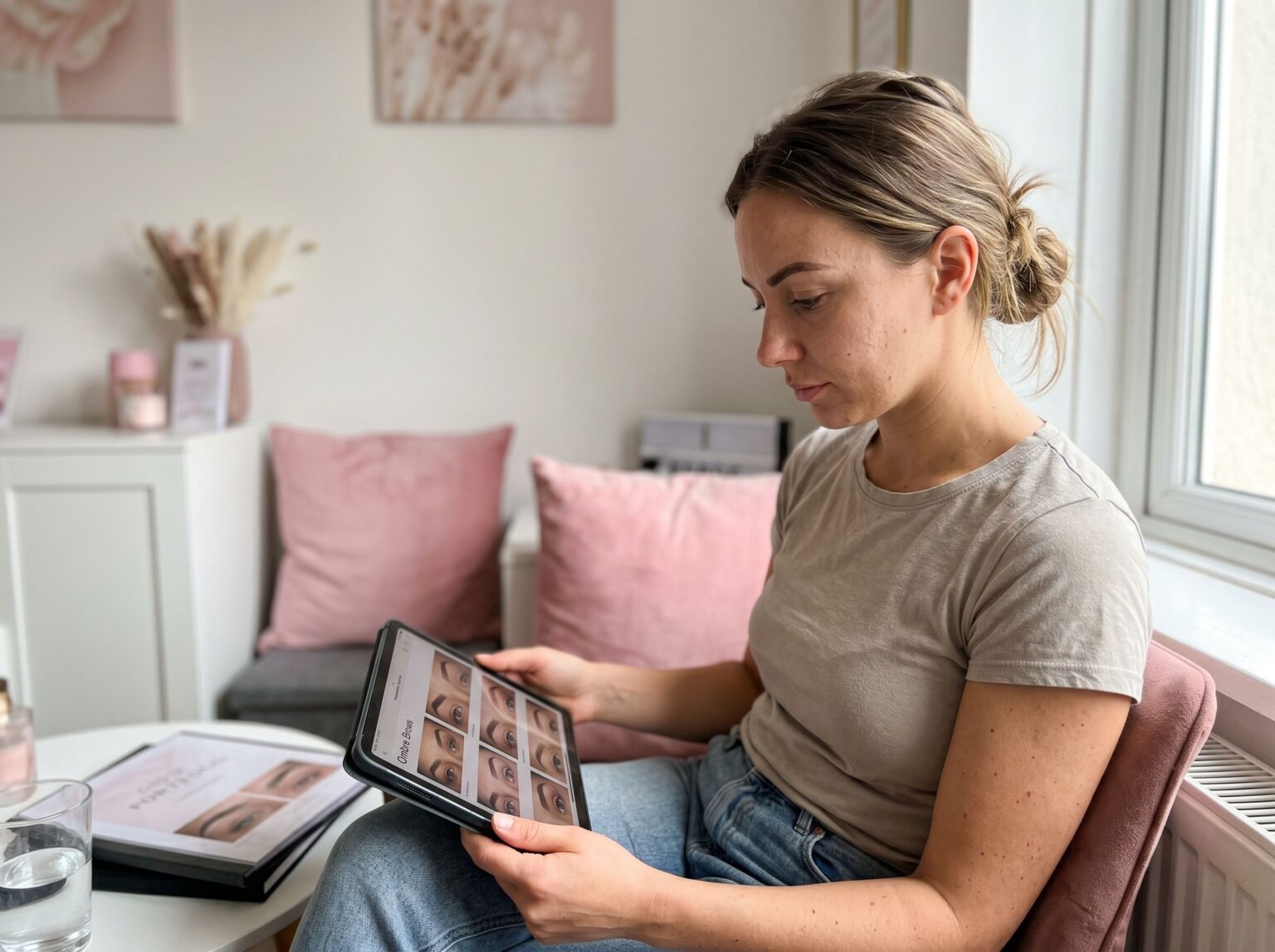
I begin by discussing what you dislike about the current brows and what you would like to change. Photographs of preferred brow styles can help explain whether you want a natural, softly defined or more makeup-like finish, although the final design must suit your face and existing pigment.
I assess your natural brow hair, skin type, colour and the healed tattoo. We discuss the proposed shape and pigment tone before treatment. I also ask about allergies, sensitivities, relevant medical history and previous reactions to cosmetic tattooing. I will advise at consultation whether a patch test is appropriate.
Before any pigment is implanted, I map the brows and show you the proposed design. This is the point to ask questions and raise concerns. I use anaesthetic during the treatment, but comfort can vary between people. The skin may be tender, appear darker initially and form some light scabbing as it heals.
Permanent makeup healing generally takes several weeks. The early colour is not the final healed result, so I ask clients to follow the aftercare information carefully and avoid judging the brows too soon. We can discuss any follow-up appointment once the skin has healed, depending on the treatment plan and how the colour has settled.
How do tattoo brows and microblading compare on an old brow tattoo?
Tattoo brows is a broad phrase that can describe several forms of permanent makeup, including machine-created powder or ombre brows. Microblading specifically uses a manual blade to create strokes. The right choice depends on the existing tattoo, your skin and the finish you prefer, not simply on which phrase sounds more natural.
Microblading can give a delicate, hair-stroke appearance when the skin and starting point are suitable. Machine shading can be more useful when the old pigment needs softening, when the skin is oily or mature, or when you prefer a diffused makeup effect. A combination brow can bring together strokes and shading, but it is still dependent on the condition of the old work.
If your brows are sparse but you do not have an old tattoo, my guide to microblading for sparse eyebrows explains where the technique may fit. Existing pigment changes the decision, so I would not use that general suitability alone to determine whether you are ready for treatment.
I work from my clinic in Tollerton, York, and I offer consultations for clients who want an honest assessment before committing to further brow work.
If you would like to understand what is possible, you can contact me to arrange a consultation.
Frequently asked questions
Can I have microblading over a brow tattoo that has faded completely?
If the old pigment has genuinely faded and the skin is healthy, microblading may be considered in the same way as a new treatment. I still need to check for residual colour, altered skin texture, previous reactions and the original shape. Fading is not always the same as complete removal.
Will new microblading hide a red or grey old brow tattoo?
It may not. Residual red, orange, grey or other unwanted tones can influence how the new pigment heals. Colour correction may be possible in some cases, but adding a natural brown directly over a strongly discoloured tattoo can produce an unpredictable result. An in-person assessment is important.
Can old eyebrow tattooing be removed before new brows?
Yes, removal can be considered where the existing pigment is too dense, misplaced or difficult to correct. Options may include saline PMU removal or laser PMU removal, depending on the pigment and skin. Removal has its own healing process, so I would discuss the likely plan before booking new brow work.
How long should I wait after brow removal before new PMU?
The suitable interval varies according to the removal method, how your skin heals and whether pigment remains. I would not advise planning a new treatment until the area has recovered and can be assessed properly. Booking too soon can make it harder to judge the healed skin and remaining colour.
Can old microblading be covered with ombre brows instead?
Sometimes. Ombre brows use machine-placed dots to create a softly shaded finish, which may disguise faded or uneven old strokes more effectively than adding individual hair strokes. They are not a universal cover-up solution, however. Dark, saturated or poorly positioned pigment may still need correction or removal first.
Does previous brow tattooing make treatment more painful?
Not necessarily, although every person experiences treatment differently. Existing work can affect the skin’s texture and sensitivity, so I assess it before treatment. Anaesthetic is used during my PMU treatments. I also explain expected tenderness and healing so you can make an informed decision.
Can I choose a completely different brow shape over an old tattoo?
Only within the limits created by the existing pigment and your natural anatomy. A small adjustment may be achievable, but a new shape cannot always conceal pigment that sits well outside it. If the old outline is too wide, low or uneven, removal or reduction may be needed before redesigning the brows.